Sony PSP-1000: Identification, Media and Using It Today
Sony’s December 2004 launch release identifies the PSP-1000 with a Memory Stick Duo/PRO Duo slot, USB 2.0 mini-B connector, lithium-ion battery and read-only UMD drive. The detailed manual in this evidence pack is for the North American PSP-1001, a regional member of the original PSP-1000 family. Use it for the documented transfer steps below, while keeping regional specifications distinct. (Sony Interactive launch release; PSP-1001 instruction manual, pp. 58–71, 111–112, 134)
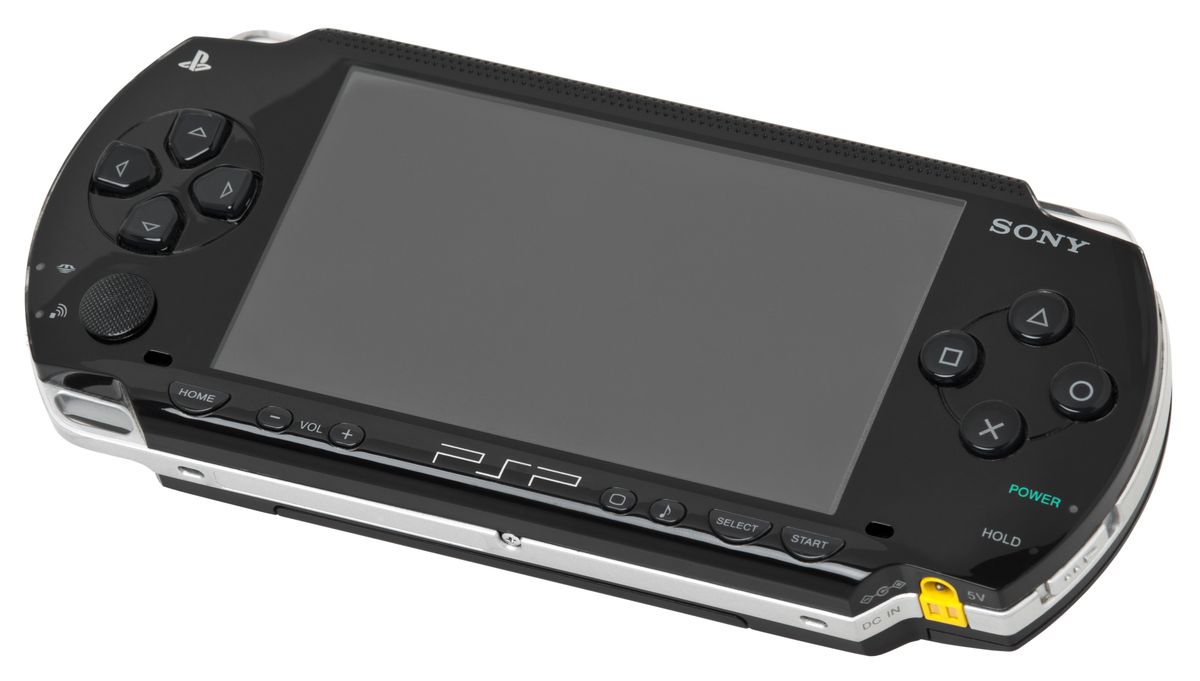
Photo by Evan-Amos; released into the public domain, via Wikimedia Commons.
Copy music to the Memory Stick Duo
With the PSP off, insert a compatible Memory Stick Duo. Sony documents two computer transfer routes: connect the PSP to a PC with a commercially available USB cable and use USB Connection, or remove the card and use a reader. A standard-size-only Memory Stick reader requires Sony’s MSAC-M2 Duo adapter for the smaller Duo card. On the PSP, music belongs in the PSP/MUSIC folder hierarchy; the manual says files placed elsewhere are not recognized as music. Keep files in formats supported by the system. (PSP-1001 manual, pp. 58–71, 111–112)
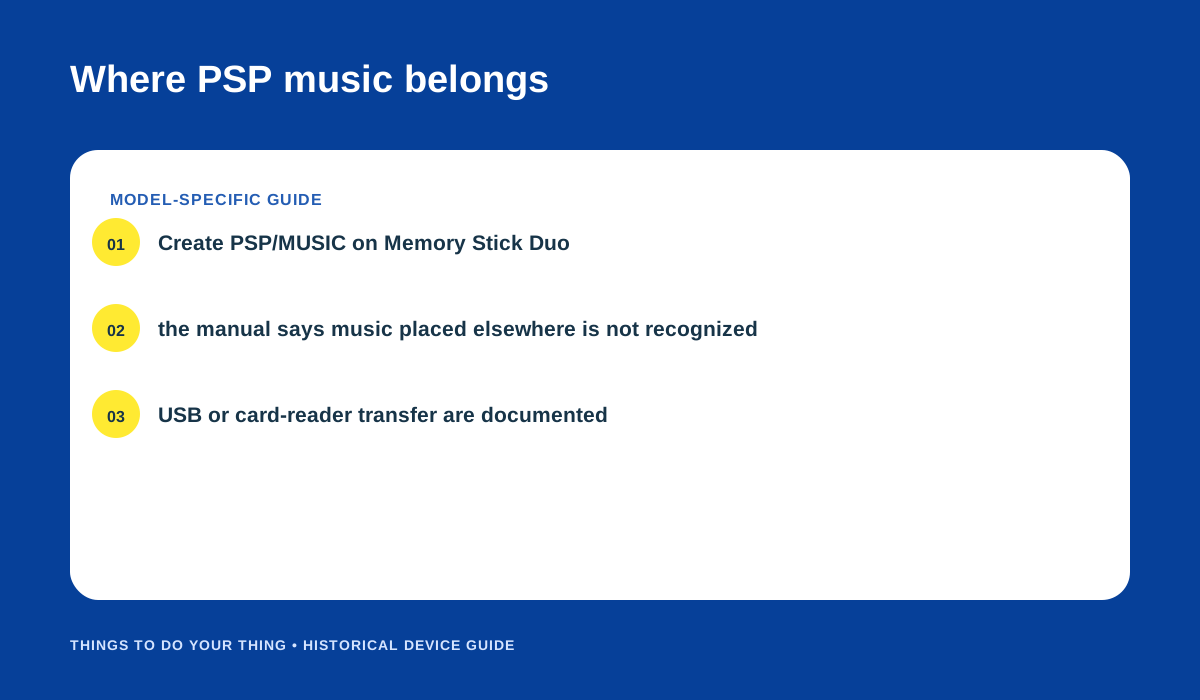
Memory Stick Duo routes and required music folder from the PSP-1001 manual. Original editorial diagram.
The original Sony manual’s CD-import procedure specifies Windows XP and SonicStage 3.1 or later. That describes a period workflow, not current installer availability or compatibility. For an existing music collection, the manual’s USB or card-reader file-copy route is distinct from the SonicStage import instructions. Current host recognition is not established by the cited material.
Format media on the PSP
Sony warns that formatting a Memory Stick on a PC can leave it unrecognized by the PSP. If the system needs the card formatted, use the PSP’s own system-format function and understand that formatting erases the card. Back up any files first. (Sony USB Connection notice)
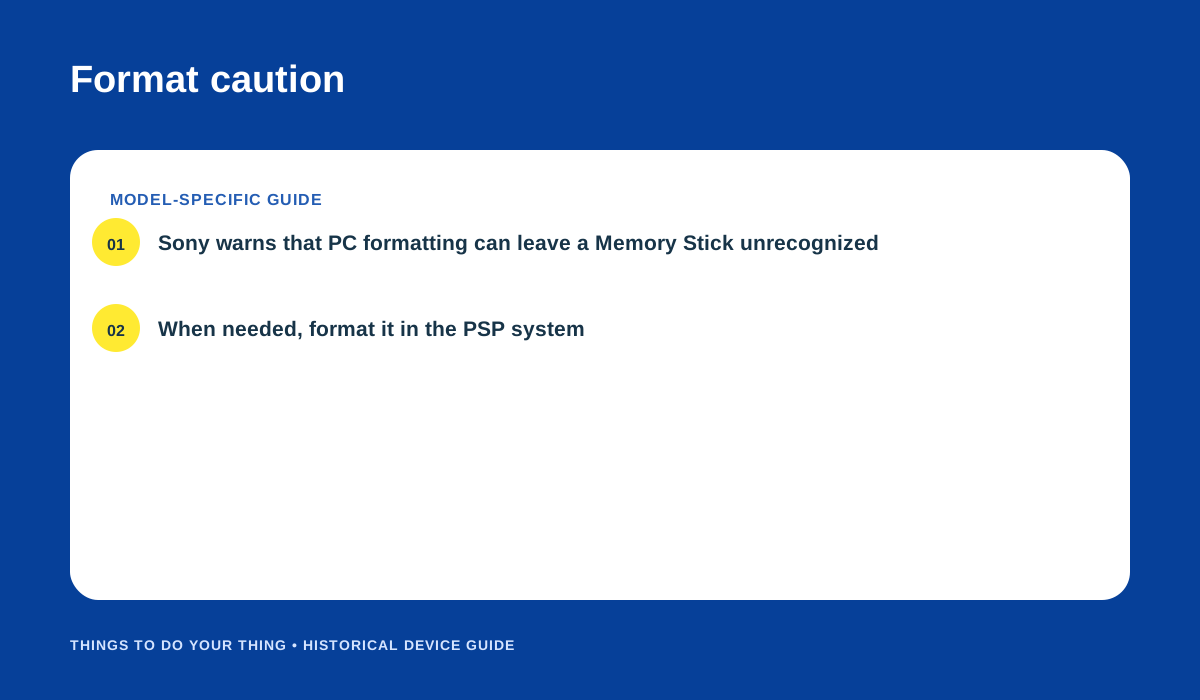
Sony’s notice about PC formatting and the system-format option. Original editorial diagram.
Power and boundaries
The launch model uses a lithium-ion battery and DC IN 5V power. Its UMD drive is read-only: the user workflow here is to copy files to removable media, not write data to a UMD. The Sony launch source describes the Japanese PSP-1000; do not assume every bundled accessory or regional detail is identical on a PSP-1001. (Sony launch release)
Sources
- Sony PSP-1001 Instruction Manual, pp. 58–71, 111–112, 134.
- Sony Interactive: PSP enters the market in Japan, 2004.
- Sony: USB Connection.
Image credits
- Photo: Evan-Amos, “Psp-1000,” released into the public domain, unchanged, via Wikimedia Commons.
- “Where PSP music belongs” and “Format caution”: original editorial diagrams based on the linked Sony documentation.